The duration was exceptional
- 1,425 discharge hours were recorded in 2023.
- 2,583 hours were recorded in 2024.
- 854 hours were recorded in 2025.
- 1,193 hours were recorded in 2026 to 14 March.
Sherborne's sewage is pumped to Bourton-on-the-Water for treatment. When the works cannot cope, storm discharge reaches the River Windrush - and flows back past our parish.
Sewage from Sherborne is carried through two pumping stations to the Bourton-on-the-Water sewage treatment works (STW). The works has historically been able to process 47 litres per second. An upgrade intended to raise that capacity to 143 litres per second has been planned for years, while its expected completion date has repeatedly slipped.
The River Windrush runs from Bourton alongside Sherborne parish. Sherborne Brook is a tributary, so it is not directly affected by the STW discharge; nevertheless, polluted Windrush water passes beside our parish. We pay for our sewage to be treated, and we want clear evidence that this is happening.
The STW sits east of Bourton-on-the-Water on Rissington Road. From Bourton, the Windrush flows south-east towards Sherborne parish. Sherborne Brook joins the Windrush further downstream.
Explore the area on OpenStreetMap ↗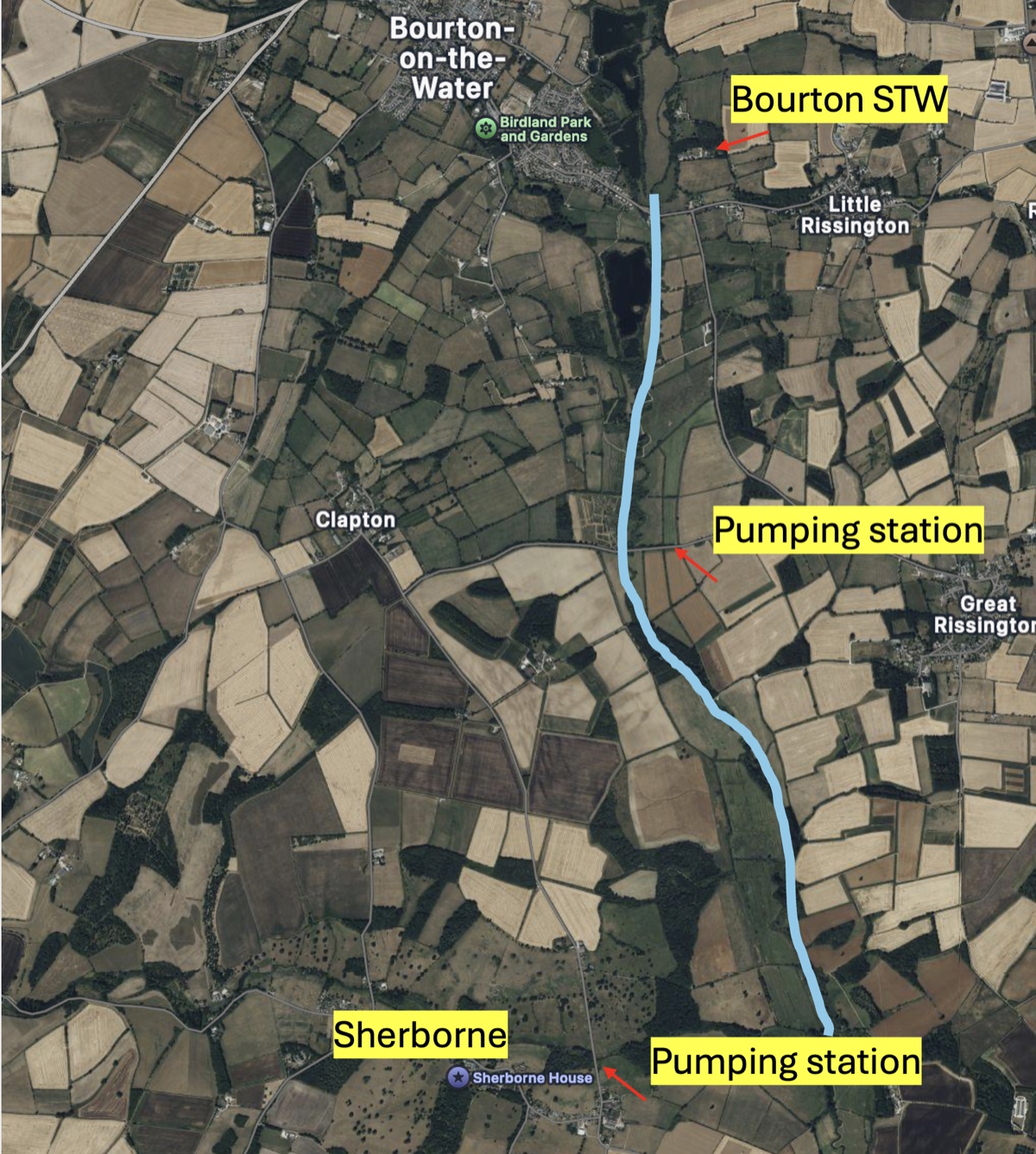
From about 17 January to 14 March 2026, the Bourton STW appeared to discharge almost continuously. Thames Water's data recorded 1,193 hours to 14 March. Our monitoring has shown no further discharge since that date.
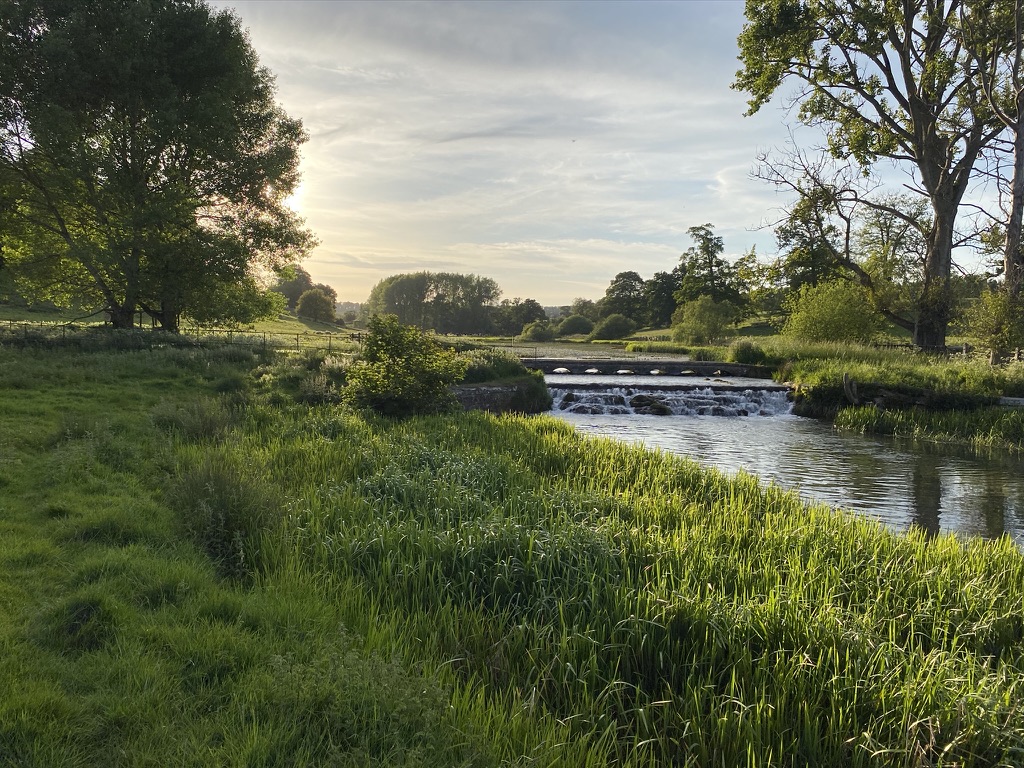
Our monitoring finds no current evidence of sewage contamination in Sherborne Brook. The water is clear, phosphate readings are generally good and overall health is very good. There are separate problems of siltation and excessive vegetation in the Broadwater and Narrow Water, but these should not be confused with the sewage concerns affecting the Windrush.
Questions were submitted before the Windrush Catchment Partnership meeting in March 2026. Thames Water, which had previously attended regularly, provided no representative. The questions recorded in the minutes went unanswered. Thames Water also missed the July meeting. A subsequent telephone call did not resolve the technical issues. We therefore submitted an Environmental Information Regulations request on 21 July. Thames Water responded on 10 September 2026.
The response provides some useful information. However, our review finds that most questions remain unresolved. Thames Water confirms it holds no completion, handover or commissioning certificate for the capacity scheme. Its delay register forecasts construction completion in October 2027. Formal takeover is forecast for February 2028. The project was originally due for completion in 2023.
What did the prolonged 2026 discharge reveal about the works' capacity?
Why did some published stop times apparently change retrospectively?
What volume was discharged, at what concentration, and with what treatment?
Why have successive upgrade completion dates moved from 2023 to 2024, 2025 and now autumn 2026?
What work is funded, and what evidence supports the 2045-2050 overflow target?
Thames Water's Groundwater Impacted System Management Plan (GISMP) originally programmed the works for completion by 31 March 2023. Later annual updates moved the expectation to 2024 and then 2025. Thames Water's website subsequently gave autumn 2026. The delay register supplied with its EIR response now forecasts construction completion in October 2027. Formal takeover is forecast for February 2028. In our assessment, the plan is untidy and difficult to follow. Its 2025 annex also includes nine other Cotswolds sewer systems.
Read Thames Water's GISMP ↗Thames Water answered our nineteen numbered questions and supplied four attachments. Our review finds that three were clearly answered. Seven were only partly answered, contradictory or misdirected. Seven were not answered. We challenge two refusals. These are SBSG's editorial assessments, not legal findings.
Thames Water has invited Roger Davies of SBSG, Andrew Woolley of Sherborne Parish Council and Jack Knott of the Windrush Catchment Partnership to visit the works and speak to engineers. We will report back after the visit.
After Ben spotted a deposit and surface film between the lower bridge and Bottom Weir, checks found no chemical anomalies. The material was probably weather-related algae washed over the lower waterfall. The Environment Agency, National Trust and Windrush Catchment Partnership responded, and monitoring continues.
Thames Water has requested an extension to the response period for our Environmental Information Regulations request. It now proposes to respond by 14 September 2026, rather than the original deadline of 18 August.
The catchment coordinator has requested a meeting involving relevant Thames Water and Bourton STW staff, SBSG, the Cotswolds Rivers Trust and local parish councils. No meeting is yet confirmed. A possible future invitation to water-quality monitoring workshops was also discussed.
Thames Water was asked for written answers about capacity, discharge data, investment and programme dates.
Thames Water did not attend the July Windrush Catchment Partnership meeting after also missing March.
Thames Water did not provide its usual representative, despite questions having been submitted in advance about the Bourton-on-the-Water STW.
No further discharge has been observed on Thames Water's live map since this date.
A reader-friendly review of all nineteen questions, with the full record available to download.
Live dataThames Water storm-discharge mapSelect the Bourton-on-the-Water facility to see its latest status.
Related organisationWindrush Against Sewage PollutionAn Oxfordshire-based charity investigating sewage pollution locally and nationally.
Film and televisionDirty Business · Channel 4A factual drama based on WASP's investigation into pollution of the Windrush.
Your information rightsICO guidance on EIR deadlinesHow the 20-working-day response period and limited extension operate.